
 Loading ...
Advocacy Groups Win Educational Gains; Keep the Pressure On!
Date: June 29, 2011
By Jackie Taylor with Ellen Fern and Heidi Silver-Pacuilla
WIA Reauthorization
 On June 17, 2011, the National Coalition for Literacy and several adult education and family literacy organizations submitted their recommendations for the Senate Discussion Draft of the Workforce Investment Act of 2011. Many adult education advocacy groups, such as the Association of Adult Literacy Professional Developers (AALPD), Center for Law and Social Policy (CLASP), Commission on Adult Basic Education (COABE), National Coalition for Literacy, the New England Literacy Resource Center (NELRC) , ProLiteracy, Teachers of English to Speakers of Other Languages (TESOL), World Education, the National Council of State Directors of Adult Education (NCSDAE), the Council for Advancement of Adult Literacy (CAAL), and others, recommended that the Senate draft include or consider educational gains as a performance measure for adult education.
NCL President Heidi Silver-Pacuilla and other representatives of advocacy groups attended a closed-door meeting with Senate Health, Education, Labor, and Pensions (HELP) Committee staff. They discussed their concerns with the Senate draft of WIA Title III, including the field’s #1 priority of including a measure for educational gains.
Senate staff agreed and included the following statutory performance language to Title I:
(V) the percentage of program participants who, during a program year, are in an education or training program that leads to a recognized postsecondary credential or employment and who are achieving measurable skill gains toward such credential or employment.
Thank you to all advocacy groups for their successful efforts!
According to our sources, the Senate HELP Committee staff have not made other changes to Title III at this time. However, we are hopeful that digital literacy, recommended by NCL and the American Library Association (ALA), may have been included so we look forward to seeing a revised draft. Other items NOT addressed thus far include changes in language to staff development, professionalization, and teacher working conditions, and other high priorities for NCL and its Member organizations. Scott Cheney, lead staffer for Senator Patty Murray’s office, noted that there will be additional opportunities for further discussion and action as the bill moves to the Senate floor and in the development of a House bill.
The Senate HELP Committee continues to plan to mark up the “Workforce Investment Act Reauthorization of 2011.” The mark up was originally scheduled for Wednesday, June 29 at 4:30 pm ET. However, this has been postponed, and the mark up has been pushed back until after the July 4 recess to Wednesday, July 13th at 10:00 a.m.
The Adult Education and Economic Growth (AEEG) Act of 2011
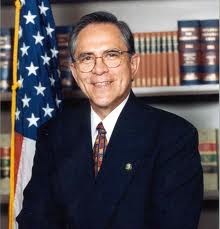 The Coalition is reviewing H.R. 2226, the Adult Education and Economic Growth (AEEG) Act. Congressman Hinojosa reintroduced it on June 17th. Some key points that echo NCL’s priorities:
- Title I – Workforce Investment Systems: Alignment of workforce and education and training systems; development of integrated education and training models; development of career pathway models.
- Title II – Adult Education, Literacy, and Workplace Skills:
- Authorizes $850M to be appropriated for FY2012.
- Codifies EL/Civics.
- Raises the cap for state leadership from 12.5% to 15%.
- Includes stronger language for National Activities and State Leadership, requiring some activities like professional development systems for states.
- Creates a National Center for Adult Education, Literacy, and Workplace Skills.
- Title III – 21st Century Technology and Skills for Adult Learners: Authorizes $250M to be appropriated for this Title in FY2012 and addresses technology priorities for adult education.
- Title IV – Research in Adult Education: Establishes a national research and development center for adult education, literacy, and workplace skills.
- Title V – Employer Incentives: provides tax credits for employers who invest in their workers’ education.
Some issues not addressed include professionalizing the adult education workforce, improving practitioner working conditions, and revising the funding formula to include the population of English language learners with a high school diploma or equivalent.
The Coalition is continuing meetings to discuss whether to support the AEEG Act.
Senator Webb is expected to introduce the companion bill in the Senate. We hope to work with him on key issues that are still of concern to the Coalition.
