
 Loading ...
Public Policy Updates
Date: July 1, 2011
By Washington Partners
Budget and Appropriations
 The best 4th of July fireworks in Washington this year might just be under the dome of the U.S. Capitol versus on the National Mall. The inability of the Congress to come to consensus on a plan to raise the federal debt ceiling has led to fiery remarks and partisan sparks all week.
In his first news conference in months, President Obama compared the slow progress on negotiations to kids unable to finish their homework. He soundly criticized Republicans for drawing a line in the sand on closing tax loopholes, further fueling the fire. In response, House leadership complained that the President had been “AWOL” on the deficit issue until recently, saying his absence has been the problem, and reiterated their view that tax increases would lead to further job losses.
On Thursday, Senate Majority Leader Harry Reid (D-NV), at the urging of the President, cancelled the Senate’s scheduled July 4th recess. Members of the House and Senate have been passing each other in regional airports all year, with both chambers seemingly rarely in session at the same time. The House will return to Capitol Hill next week after this week’s District Work Period, putting all 435 Members in town and at work at the same time. Reid’s decision was met with squeals of protest from many Senators who feel they haven’t been—and won’t be—party to the negotiations, and staying in town rather than spending the week with family and constituents will not contribute to a resolution.
Slow progress on the debt ceiling is par for the course in the 112th Congress. So far, only 18 bills have been signed into law—15 of which named buildings, were continuing resolutions or confirmed federal appointments. The Senate has yet to produce a budget resolution, and despite claims in the House that all 12 appropriations bills would be passed by the August Recess, only three have cleared the floor to date. The House Labor, Health and Human Services and Education Subcommittee has a mark-up set for July 26th but no floor action on the bill is anticipated before the fall.
In the Senate, Appropriations Committee Chair Daniel Inouye (D-HI), frustrated with the lack of a budget resolution or deficit reduction agreement, is pushing for consideration of some of the less contentious spending bills. A bill from the Senate Labor, Health and Human Services and Education Subcommittee is still months away.
WIA and ESEA Reauthorization
On the education authorizing legislation front, the Senate Health, Education, Labor and Pensions (HELP) Committee had hoped to act on the reauthorization of the Workforce Investment Act this week but, disagreements among Members about details in the legislation postponed consideration of what was thought to be a bi-partisan bill until July 13th.
Over in the House, Education and the Workforce Committee staff is reportedly working on a third bill related to the reauthorizing the Elementary and Secondary Education Act (ESEA). The so-called “Flexibility Bill” could be debated by the panel sooner than expected. The House has considered two ESEA bills and is getting close on a third. The Senate has yet to act on ESEA. It certainly isn’t the dynamic or sequence education advocates expected when the 112th Congress convened in January. Something to ponder as fireworks and family are enjoyed nationwide this weekend.
Senate Holds First-Ever Hearing on the DREAM Act
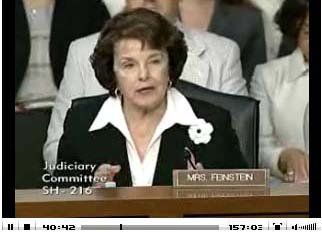 On Tuesday, June 28, the Senate Judiciary Refugees and Border Security Subcommittee held the long-awaited first hearing on the DREAM (Development, Relief and Education for Alien Minors) Act, which was originally set for September 2001 and took ten years to reschedule. The bill would allow undocumented students to attend an institution of higher education and provide them an opportunity to earn legal status if they were brought to the U.S. as children; are long-term residents of the U.S.; “have good moral character;” and complete two years of either higher education or military service “in good standing.”
Chaired by Senator Dick Durbin (D-IL), the hearing highlighted the potential for bipartisan support of the proposed legislation. Undocumented students filled the seats in the hearing room, in their caps and gowns, and Durbin introduced some of them, spotlighting their achievements. Durbin stated, “They want to serve the country they love. All they want is a chance.”
Senator John Cornyn (R-TX) stated that there is Republican support for the affected students, but his biggest concern lay with the perspective that more needs to be done to secure the American borders and inhibit illegal workers. “To use border security as a reason not to give these young people a chance makes no sense to me,” Dianne Feinstein (D-CA) said, explaining that the borders are more secure than they have been in the past decade.
Secretary of Education Arne Duncan, a witness at the hearing, voiced his support of the DREAM Act stating, “The DREAM Act is a common-sense piece of legislation that is in keeping with core American values. It will open the doors of higher education to those individuals who were brought to American by their parents as undocumented children. And in the process we will sustain our economic competitiveness into the future.”
Secretary of Homeland Security Janet Napolitano asserted that the passage of this bill would allow security efforts to focus on those individuals who cause a threat to the country rather than expending resources on students who positively contribute to American society. (For more information or to view a webcast of the hearing, click here.)
To download the full Education Week report from Washington Partners, click here.
